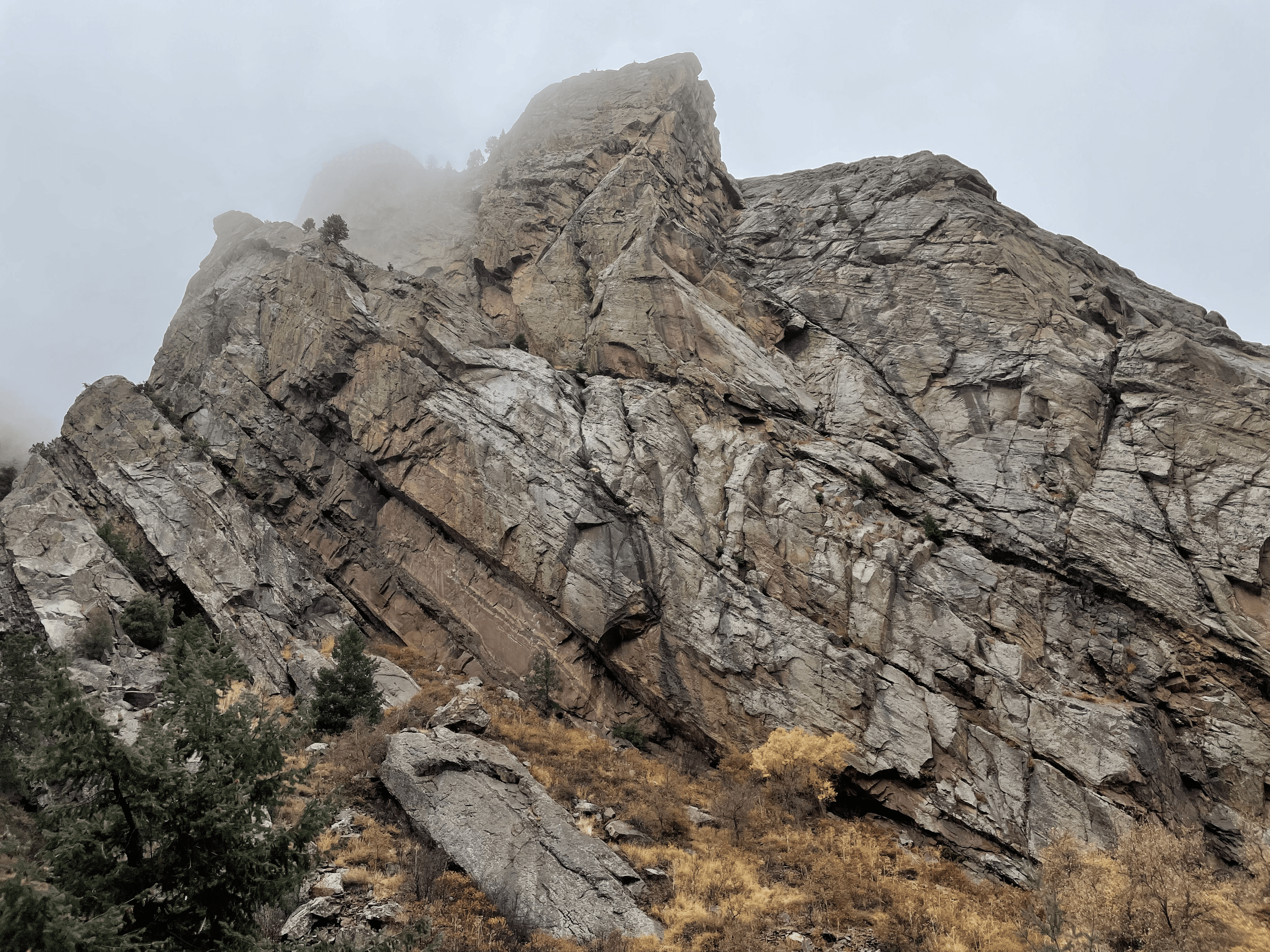
The History of Eldorado Canyon
From ancient geological forces to modern climbing ethics, discover the epic story of Colorado's most iconic canyon
Born from Ancient Forces
Three mountain ranges have risen and eroded in this location, creating the unique geology that makes Eldorado a world-class climbing destination
Ancient Mountain Core
Boulder Creek Granodiorite forms deep beneath Earth's surface during ancient mountain building. This rock forms the foundation of Eldorado Canyon's walls.
Ancestral Rockies Rise
The Ancestral Rocky Mountains emerge. Erosion deposits create the distinctive red Fountain Formation sandstone that forms the canyon walls.
Modern Rockies Uplift
Current Rocky Mountains rise during the Laramide Orogeny, tilting sedimentary layers into dramatic angles. South Boulder Creek begins carving the canyon.
Ice Age Sculpting
Glacial meltwater from the Great Ice Age deepens the canyon. Although glaciers never reached Eldorado, torrential meltwater carved its present dramatic form.
Geological Highlights
- • Boulder Creek Granodiorite: The canyon's ancient 1.7-billion-year-old foundation
- • Fountain Formation: Red sandstone walls formed from Ancestral Rockies erosion
- • Coal Creek Quartzite: Rare, bullet-hard rock visible near South Boulder Creek
- • Tilted layers reveal three episodes of mountain building at this location
Eldorado Springs
Before climbers discovered the canyon walls, Eldorado Springs was Colorado's premier resort destination, attracting up to 60,000 visitors per summer
Ute Indians inhabit the canyon from ~13,000 years BP until mid-1800, using its walls for winter protection
Largest swimming pool advertised "in the country" completed, attracting visitors nationwide
June 27: Ivy Baldwin performs first wire walk across canyon at 582 feet high, 635 feet across
Grand Eldorado Hotel opens; Crags Hotel built on mountainside with inclined railway
November: Crags Hotel burns down mysteriously, fire visible from miles away
July 31: Ivy Baldwin's final wire walk at age 82 - his 86th crossing
Colorado purchases 400+ acres, establishing Eldorado Canyon State Park
Ivy Baldwin: The Wire Walker
Born William Ivy in 1866 in Houston, Baldwin performed 86 crossings of Eldorado Canyon on a 7/8-inch cable stretched 582 feet above South Boulder Creek, 635 feet across. His first walk was June 27, 1907, and his final walk at age 82 on July 31, 1948. The anchors for his wire became the first summit anchors on the Bastille and Wind Tower.
Notable: Baldwin was also one of America's first hot air balloonists and survived numerous accidents including being blinded by sun reflection mid-walk.
The Crags Hotel Mystery
Built in 1908 by A.D. Stencel high on the mountainside, the luxurious Crags Hotel featured an innovative gravity-powered inclined railway (funicular) and could be reached by wagon road or rail. In 1912, the hotel burned in a mysterious fire visible from miles away. Whether arson or accident remains unknown. Ruins can still be visited via Rattlesnake Gulch Trail.
Access: Three ways to reach - Denver & Salt Lake Railroad, wagon road (now trail), or the unique water-powered inclined railway.
The Legends Who Shaped Eldorado
Visionaries who transformed sheer walls into climbing history
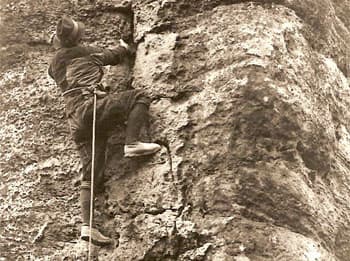
Oliver Perry-Smith
European-trained climber who soloed many routes decades before documentation, possibly achieving 5.10 grades. Neighbor confirmed years of solo exploration.
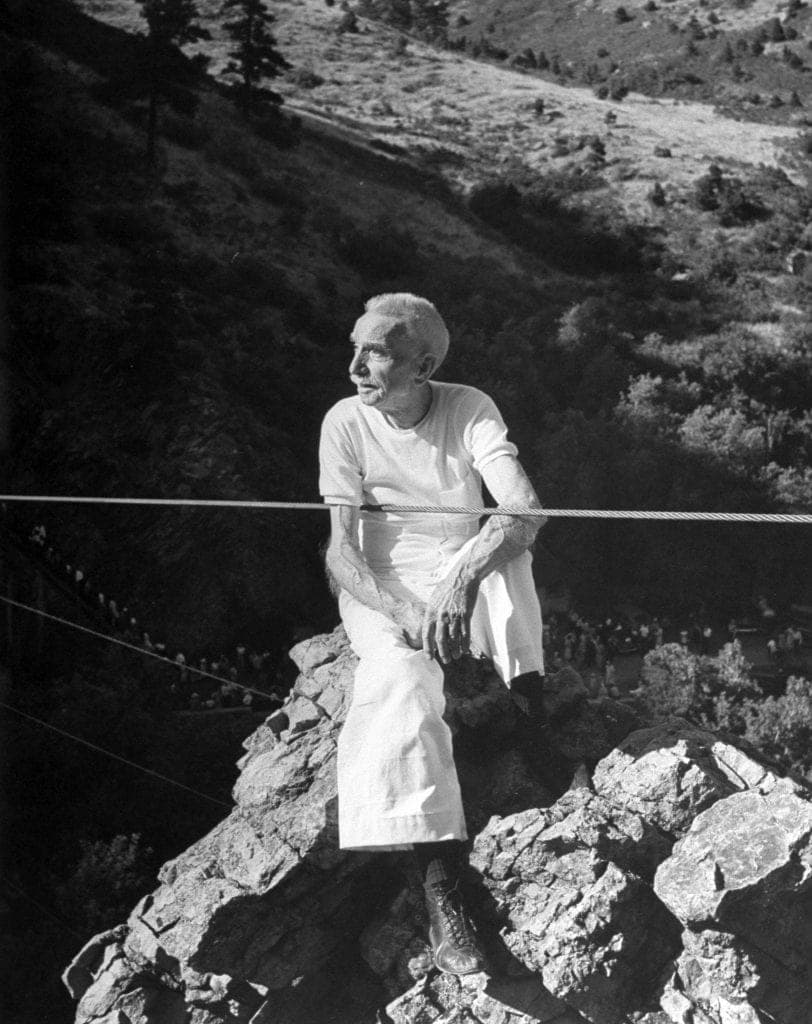
Ivy Baldwin
Aerialist who walked wire between Bastille and Wind Tower more than 80 times. Created first summit anchors. Born William Ivy in 1866.
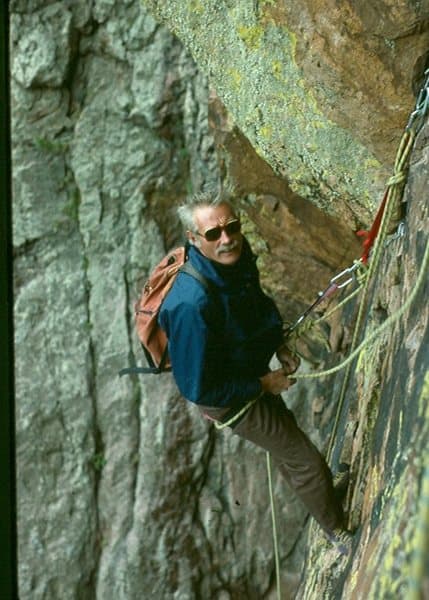
Layton Kor
Revolutionized Eldorado climbing with bold first ascents including The Bulge (1957), Northwest Corner and Yellow Spur (1959). Established 55+ routes.
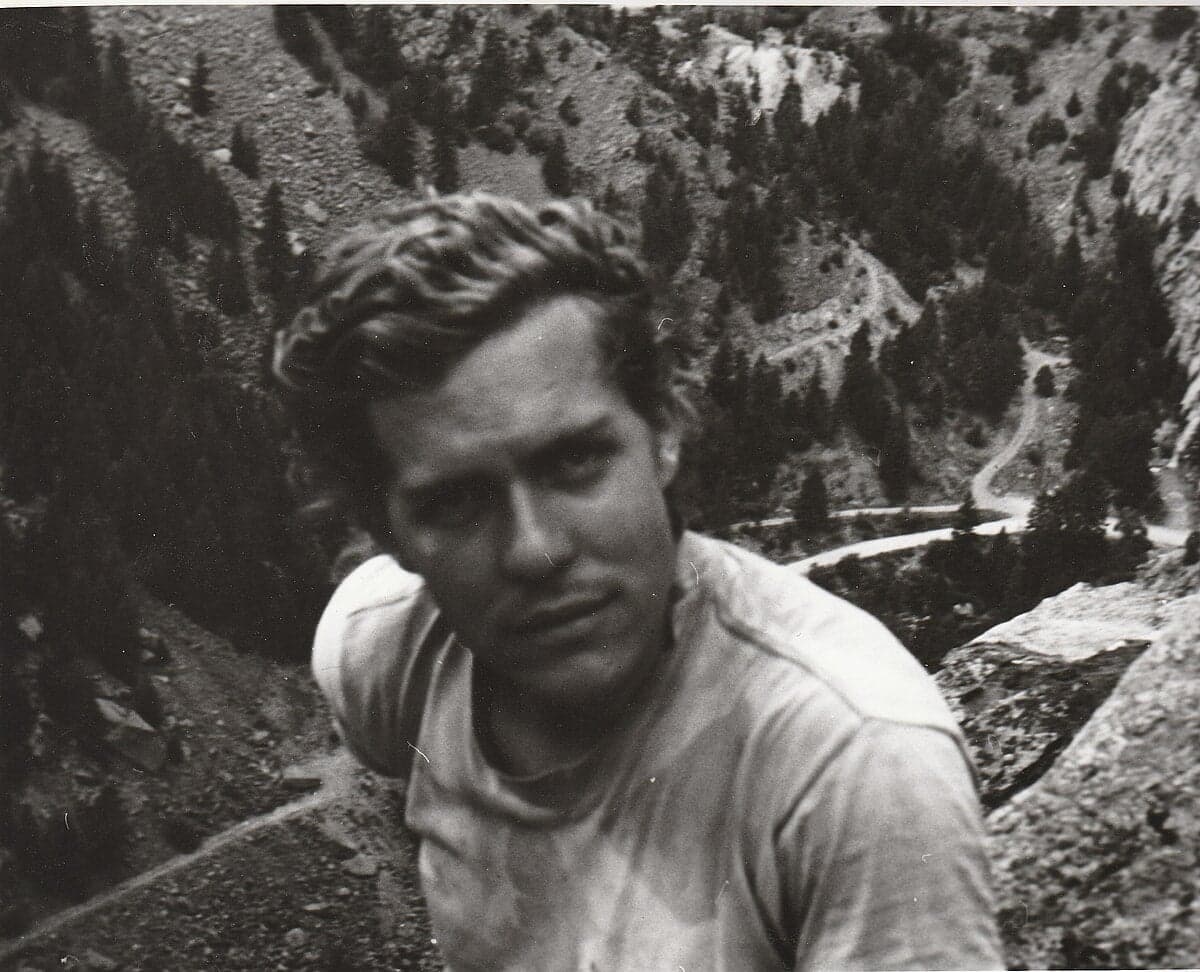
Pat Ament
Partnered with Kor and Dalke on many first ascents. Author of first Eldorado guidebook (1975) and climbing philosopher who helped define the canyon's ethics.
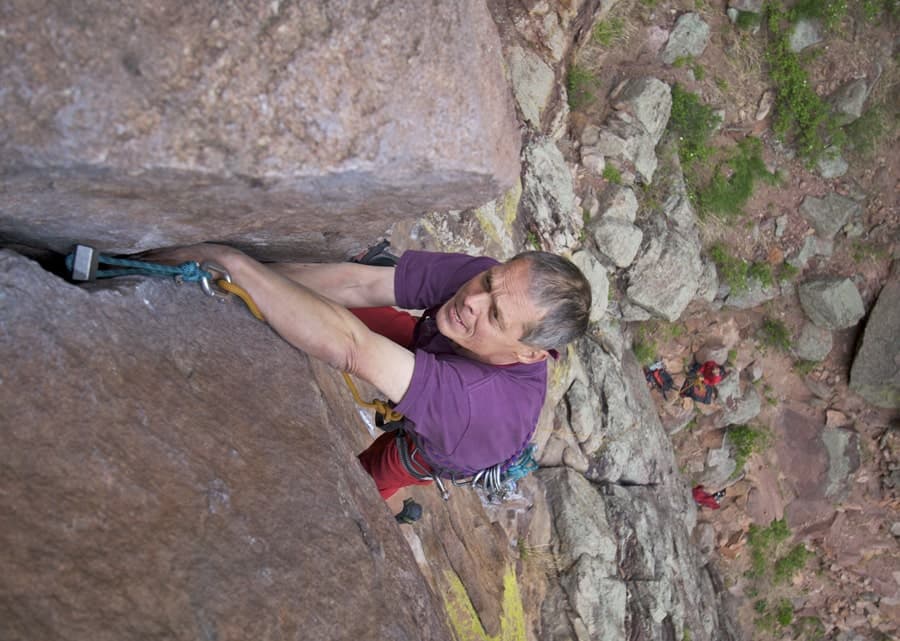
Jim Erickson
Pioneer of free climbing, first to free Blackwalk and Rincon (1969). Famous for "naked, on-sight" ethic and free solos of Blind Faith and Sooberb (1972).
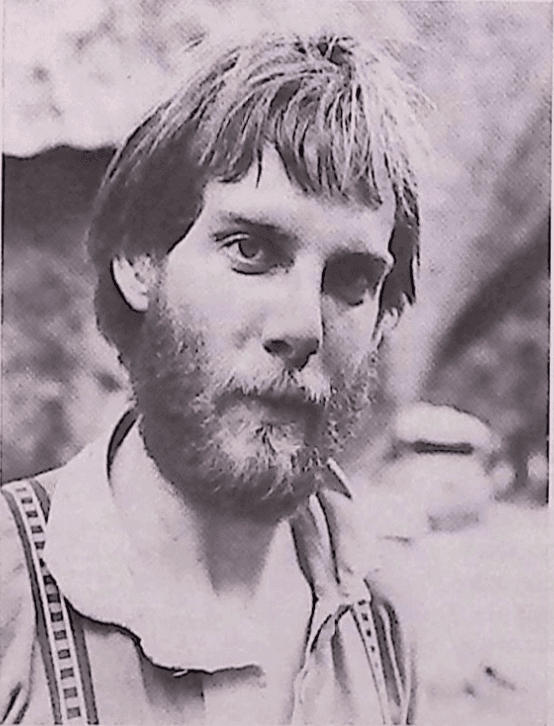
Steve Wunsch
Eastern climber who brought siege ethics, freed Psycho (first 5.12) and Kloeberdanz (1974) with gymnastic style.
Additional Notable Climbers
Duncan Ferguson: Yoga-practicing climber who freed The Naked Edge with Erickson (1971)
Roger Briggs: Freed The Diving Board (1971) and Scary Canary (1980)
Larry Dalke: Young partner of Ament, freed The Green Spur (1964) and XM (1967)
Royal Robbins: Introduced clean climbing with Grand Giraffe ascent (1968)
From Aid to Free
The transformation of climbing ethics and techniques through seven decades
The Discovery
Army's Tenth Mountain Division discovers Eldorado. First documented ascent of Bastille Crack in 1954-55 by unknown climbers.
- First recreational ascents
- Redguard Route (1956) - first documented climb
- Small core group of Boulder climbers
The Golden Era
Layton Kor's revolutionary period establishing most classic lines with minimal protection. Over 55 first ascents in Eldorado alone.
- The Bulge (1957) - Kor's breakthrough
- Northwest Corner, T2, Yellow Spur (1959)
- Naked Edge (1962), Genesis, Psycho established
Free and Clean Revolution
Transition from pitons to removable protection. Royal Robbins climbs Grand Giraffe (1968) with no pitons.
- First all-nut ascents
- Environmental ethics emerge
- Naked Edge freed (1971)
- Psycho - first 5.12 (1975)
Evolving Sport
Refinement of free climbing standards. Genesis sieged 100+ times by Jim Collins (1979).
- Genesis - new standard (1979)
- Scary Canary by Roger Briggs
- Alec Sharp's bold routes
- Superfly - hardest gear lead (1983)
Bolting Controversy
Sport climbing arrives with Rainbow Wall (1984) and Paris Girl (1985). Community debates fixed protection.
- First rap-bolted routes
- Paris Girl controversy (1985)
- Fixed Hardware debates
- Your Mother - first power drill (1988)
Modern Era
Formation of ACE and Fixed Hardware Review Committee. Balance of tradition and progress.
- FHRC established (1992)
- Headpointing arrives (2000)
- Tommy Caldwell's hard routes
- Community consensus model
The Clean Climbing Revolution
How Eldorado embraced the movement that changed climbing forever
From Pitons to Protection
In 1968, Royal Robbins climbed Grand Giraffe with Pat Ament and Jamie Logan carrying no pitons—a revolutionary act. Influenced by the 1972 Chouinard catalog advocating for clean climbing, Eldorado climbers rapidly adopted removable protection.
By 1972, leading climbers no longer carried pitons. This shift preserved the rock and raised the commitment level, as routes became more serious without the option of hammering protection. The introduction of chocks by Robbins in 1966 after his Britain trip was crucial to this transition.
"The rock is sacred. Our responsibility is to climb without altering it for those who follow."
— Clean climbing ethic
Key Principles
- •Leave no trace - removable protection only
- •Respect first ascent style
- •No altering of rock features
- •Community consensus for fixed hardware (ACE/FHRC)
Historical Note
The Action Committee for Eldorado (ACE) and Fixed Hardware Review Committee (FHRC) were formed in 1992 to manage climbing development through community consensus - one of the nation's first climbing management models of its type.
Eldorado Today
Home to over 1,000 climbing routes, Eldorado Canyon continues to challenge and inspire climbers with its unique combination of technical face climbing, bold traditional lines, and rich history.
Classic Routes
From moderate classics like Wind Ridge to test pieces like The Naked Edge, Eldorado offers world-class climbing at every grade.
Conservation Ethics
The canyon maintains its traditional character through community consensus and respect for the rock and its history.
Climbing Community
A vibrant community continues the legacy of innovation while preserving the canyon's unique character for future generations.
Be Part of the Story
Help us preserve Eldorado Canyon's incredible heritage for future generations